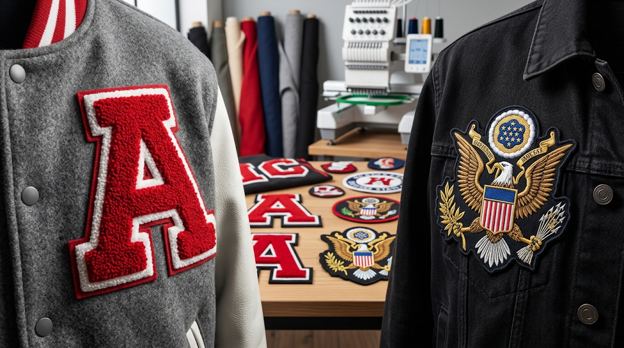
Like patches can make your jacket stand out just like that, patches can break a jacket’s overall appearance. So when talking about chenille vs embroidered patches, people ask a lot about which one is the better option for their jacket.
Some patches are like clouds, feeling as if they are made out of a plushy. Others are smooth and sleek, with an expensive branded feel. Both look awesome on jackets, bags, and hats.
In this guide, you will see the breakdown of chenille patches vs embroidered patches step by step.
What Is a Chenille Patch?
A chenille patch is made from soft, fluffy yarn. The yarn gets tied in loops, and then they are trimmed in order to brazen that fluffy and raised look.
Chenille patches feel so soft like a blanket that you instantly want to touch upon seeing them. They pop right off the fabric, so the design really stands out.
The patches you will spot on any varsity jacket are chenille patches. They are also a go-to for letterman jackets.
What Is an Embroidered Patch?
An embroidered patch is stitched onto fabric with thread. It is kind of like old-school hand sewing, but get it done by machine. The design gets built in to shape line by line.
Embroidered patches feel smooth and flat, no bumps, just clean lines. They nail the small stuff, like tiny letters and thin details.
If you’re curious how this stacks up against another popular option, this guide on embroidered vs PVC patches breaks it all down in plain, easy words.
How Are Chenille Patches Made?
So how do chenille patches actually come together? It starts with a design drawn on soft backing cloth, usually felt.
A special machine loops thick yarn through the cloth, row after row, until the whole shape fills in. Next, workers trim the yarn nice and even, giving the patch that soft, fuzzy top everyone loves.
How Are Embroidered Patches Made?
Embroidered patches kick off with a digital file that tells the machine exactly where to stitch. A computerized machine sews thin thread onto backing fabric, following the design like a dot-to-dot puzzle.
Tons of thread colors can jump in to add shading, tiny letters, and crisp detail. Once the stitching wraps up, the patch gets cut out and a backing gets added. Done and dusted.
Difference Between Chenille and Embroidered Patches
Here’s the real difference between chenille and embroidered patches: it all comes down to texture. Chenille feels fluffy. Embroidery feels flat.
Chenille patches use looped yarn stitched in thick rows. Embroidered patches use thin thread packed close together.
Chenille is the champ for big, bold designs. Embroidery steals the show with small, detailed designs and fine lines.
Chenille Patch Texture vs Embroidered Patch Texture
Chenille patch texture feels soft and bumpy, kind of like a cozy sweater or a shag rug. Run your fingers over it and you’ll feel every loop.
Embroidered patch texture feels smooth and firm. The threads sit tight together in neat, flat rows. Kids go wild for chenille patches because they’re just fun to touch. Grown-ups tend to love the crisp, neat feel of embroidery.
Chenille Patch Design vs Embroidered Patch Design
Still sketching your idea? These expert tips for designing a custom patch can help you nail down colors, size, and shape before you hit order.
What Makes a Good Chenille Patch Design?
A solid chenille patch design leans on big letters, bold numbers, and simple shapes. Tiny details just get lost in the yarn.
- Keep chenille designs big, simple, and bold.
- Use clear letters, strong colors, and an easy-to-see border.
- Keep it bold. Keep it readable.
- Do not make your patch work overtime.
What Makes a Good Embroidered Patch Design?
A solid embroidered patch design can pack in small text, thin outlines, and detailed pictures. The machine can stitch some seriously fine details.
- Use readable text and clear shapes.
- Good color contrast and choose the right size.
- Avoid making details too tiny.
- Clean design is better-looking for the patch.
If your logo has small words or thin lines, embroidery is hands-down the better design pick.
Chenille vs Embroidered Patches Durability
Let’s talk chenille vs embroidered patches durability, because nobody wants a patch that falls apart. Both types go the distance when you treat them right.
Chenille patch durability is solid, but that soft yarn can flatten a bit after a ton of washes or years of wear and tear.
Embroidered patch durability is next-level. Those tight stitches hold their shape for years, even with daily use.
For heavy daily wear, like a work uniform, embroidered patches usually outlast chenille by a bit.
Chenille vs Embroidered Patches Cost
Now for the money talk: chenille vs embroidered patches cost. Prices swing based on size, colors, and how detailed your design gets.
Chenille patches can run you a bit more for bigger sizes, since they eat up more thick yarn and extra time.
Embroidered patches are often the wallet-friendly pick for small and medium designs with fine details.
Ordering in bulk? That can knock the price down for both patch types, so plan ahead if you need a big batch.
Custom Chenille Patches: Best Uses
Custom chenille patches are a slam dunk for school jackets, sports teams, and clubs. They bring a fun, bold look people notice from across the room.
Go wild with fun colors and big letters to flex your team name or grad year and pick your own colors, size, and backing.
Custom Embroidered Patches: Best Uses
Custom embroidered patches are the move for uniforms, work shirts, and small logos. They keep things clean, neat, and professional.
Businesses are obsessed with embroidery because it nails small text, like a company name or job title, crystal clear.
Want to create the perfect custom embroidered patch? The whole process from idea to finished patch is handled carefully at the Eagle Pates USA.
Size & Placement: Quick Look
Have a quick look at size and placement before you order custom patches
| Placement | Recommended Size | Chenille | Embroidered |
| Chest | 3–4 in | Simple, bold designs | Logos, names & details |
| Sleeve | 3–4 in | Great for varsity jackets | Great for logos & text |
| Back | 8–12 in | Best for large designs | Great for detailed designs & text |
| Hats | 2–3 in | Simple designs work best | Ideal for curved, smaller spaces |
Pros and Cons of Chenille Patches
- Pro: Bold, fuzzy look that pops from a mile away.
- Pro: Perfect for big letters, numbers, and school spirit.
- Pro: Feels soft and fun, like a mini blanket.
- Con: Not the best fit for tiny, detailed designs.
- Con: Can flatten a bit after years of heavy use.
Pros and Cons of Embroidered Patches
- Pro: Nails small text and fine lines with ease.
- Pro: Plays nice with almost any fabric, thick or thin.
- Pro: Holds its shape for the long haul.
- Con: Doesn’t bring the same bold, fuzzy flex as chenille.
- Con: Super tiny text can still be tricky to read.
Chenille Patches for Jackets
Chenille patches for jackets bring a fun, retro vibe. That soft, puffy look just hits different. Tons of schools rely on chenille letters on jacket sleeves and right on the chest, or they prefer to place it above the pocket.
Embroidered Patches for Jackets
Embroidered patches for jackets bring a classic style that feels sharp. They’re perfect for small badges, crests, and team logos.
They hold their shape through years of wear and also bear the washing cycles, cold weather, and they do it so effortlessly.
Jacket styles are always changing, and patch trends are dominating US streetwear, which shows how brands are mixing patch styles on modern outerwear.
Best Patches for Jackets: How to Choose
Picking the best patches for jackets is about what your style is, what will be more affordable for you, and where the patch is going to be put.
Want small details, like a thin logo? Go embroidered. Want bold, fuzzy letters? Go chenille.
Think about how often you’ll wash the jacket and how the patch will be attached before you commit.
What Backing Should You Choose?
You can choose from different backing types:
- Iron-on: Quick and easy.
- Sew-on: Strong and secure.
- Velcro: Easy to remove.
- Adhesive: Useful for temporary use.
Chenille or Embroidered Patches: Which One Should You Pick?
So, should you go with chenille or embroidered patches? Honestly, it comes down to your design and your personal taste.
Go chenille for a bold, retro, fuzzy vibe. Go embroidery for a clean, detailed, professional look. Some jackets even mix both patch types together for extra texture and flair.
Chenille vs Embroidered Patches: Quick Look
Here is a briefed out comparison table of chenille and embroidered patches to kill your secondhand confusion
| Feature | Chenille Patches | Embroidered Patches |
| Texture | Soft and fluffy | Stitched and textured |
| Style | Bold, vintage, varsity | Clean, classic, versatile |
| Best For | Large letters, numbers, simple designs | Details, logos, and text |
| Appearance | Thick and eye-catching | Neat and polished |
| Detail Level | Best for simple designs | Great for fine details |
| Durability | Durable, but can flatten over time | Strong and long-lasting |
| Ideal Use | Varsity jackets, teamwear, statement pieces | Clothing, uniforms, bags, and everyday use |
| Choose It If… | You want a bold, fluffy vibe | You want a clean, detailed look |
Which Brands and Teams Use These Patches?
The table below tells you about which and how brands and teams use custom patches:
| Brand / Team Type | Patch Type | Common Use | Why They Use It |
| Schools | Chenille | Varsity & letterman jackets | School spirit |
| Colleges | Chenille | Team jackets & apparel | Bold, classic look |
| Sports Teams | Chenille | Jackets & teamwear | Team identity |
| Police | Embroidered | Uniforms & gear | Neat, professional appearance |
| Military | Embroidered | Uniforms & tactical gear | Clear identification |
| Businesses | Embroidered | Work uniforms | Clean, professional branding |
| Streetwear Brands | Both | Jackets & caps | Layered, trendy style |
| Local Clubs | Both | Jackets, bags & clothing | Club identity & group pride |
Frequently Asked Questions
Which Patch Is Better for Sports Teams?
Chenille works great for big team letters and numbers. Embroidery is better when the team has a detailed logo or mascot.
Can Chenille Patches Have Small Text?
They can have text, but very tiny words may be hard to read. Chenille yarn is thick, so simple and bold letters work best.
Which Patch Is Better for Frequent Washing?
If your jacket or uniform gets washed often, think about durability, backing, and washing method. Embroidery is often a good choice for regular daily wear.
Do chenille patches last as long as embroidered patches?
Both hold up well. Embroidered patches usually last a smidge longer with heavy daily use.
What is the best patch for a varsity jacket?
Most folks go with chenille patches for varsity jackets, thanks to those bold, fuzzy letters.
Which patch type is better for small logos or text?
Embroidered patches win this one. They’re better for small logos, thin lines, and detailed text.
Can You Iron Chenille and Embroidered Patches?
Yes, if the patch has iron-on backing. Always check the backing instructions first. Use the right amount of heat and protect the fabric when needed.
Which Suits You Better: Chenille or Embroidered Patches?
Both patch types bring something great to the table, but they suit different vibes. Chenille brings bold, fuzzy fun. Embroidery brings clean, sharp detail.
Still torn? Order a small sample of each style first, and see which one feels right for your jacket.
Ready to bring your idea to life? Reach out to the Eagle Patches USA team today and get your custom patch order rolling.