
Table of Contents
|
What Are Velcro Patches?
Velcro patches officially known as hook-and-loop patches are emblem-style pieces of fabric, PVC, or rubber that feature a hook-and-loop fastener on the back. This fastener system (popularly known by the brand name Velcro®) allows patches to be firmly attached to compatible loop panels on bags, uniforms, tactical gear, jackets, hats, dog harnesses, and more and then removed or swapped out in seconds.
Unlike iron-on patches or sew-on patches, velcro patches offer unmatched versatility: one piece of gear can host dozens of different patches over its lifetime. That swap-ability is exactly why they’ve become the standard in military, law enforcement, EMS, and tactical communities and why everyday users love them for backpacks, hats, and everyday carry gear.
Why Velcro Patches Are More Popular Than Ever
- Easily swap your patch in seconds without tools or heat
- No damage to the host garment or gear
- Interchangeable across all compatible loop-surface items
- Available in bulk or with no minimum order for custom designs
- Used by the U.S. Army, Navy, Marine Corps, Air Force, and virtually every law enforcement agency in the United States
How Do Velcro Patches Work?
The hook-and-loop system consists of two mating surfaces:
| Surface | Also Called | What It Looks Like | Role on the Patch System |
| Hook | “Rough” side | Tiny plastic hooks | Glued/sewn to the back of the patch |
| Loop | “Soft” side | Tiny fabric loops | Sewn into the surface of the gear (jacket, bag, vest) |
When you press the hook side of the patch against the loop panel on your gear, thousands of tiny hooks grab the loops and hold firmly. A firm tug releases it cleanly. This system provides a hold strength of 1–2 lbs per square inch more than enough to keep a patch in place even under vigorous activity.
| Pro Tip: Most tactical jackets, plate carriers, molle vests, and quality backpacks come with pre-sewn loop panels specifically designed for this purpose. If your gear doesn’t have one, you can add a loop panel with iron-on velcro or have one sewn in. |
Types of Velcro Patches by Material
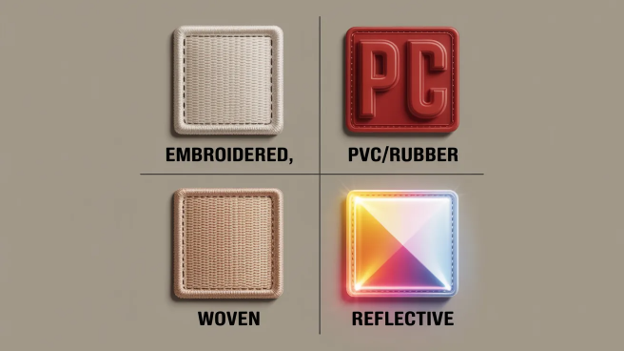
Choosing the right velcro patch starts with understanding the four primary construction styles. Each has unique visual characteristics, durability levels, and ideal use cases.
1. Embroidered Velcro Patches
Embroidered patches The most traditional and widely used format. The thread is machine-stitched over a base fabric (typically twill) to create a textured, raised design.
- Best for: Name patches, unit insignia, morale patches, police & military uniforms
- Thread coverage: 50%–100% (fully embroidered = premium look)
- Backing: Hook side stitched or heat-bonded to the back
- Durability: Excellent, holds color and shape through hundreds of washes
2. PVC / Rubber Velcro Patches
PVC patches are molded from soft rubber or hard plastic and are waterproof, UV-resistant, and virtually indestructible.
- Best for: Tactical gear, plate carriers, helmets, outdoor gear, harsh environments
- Look: Bold, 3D, graphic-heavy designs with sharp color clarity
- Backing: Velcro bonded into the molding process
- Durability: Exceptional, doesn’t fade, crack, or peel
3. Woven Velcro Patches
Woven patches use thinner threads woven into the fabric itself (like a tapestry), delivering finer detail than embroidery.
- Best for: Thin text, small logos, intricate designs
- Thread count: Higher than embroidery, allowing for more detail
- Durability: Very high, no raised threads to snag
4. Reflective Velcro Patches
Features a retroreflective material that bounces light back toward its source. Critical for night visibility.
- Best for: EMS, firefighters, law enforcement, night patrol, cyclists
- Compliance: Can be made to ANSI/ISEA 107 visibility standards
- Available as: Embroidered with reflective thread, or full-surface reflective film
Velcro Patches by Use Case & Community
Military Velcro Patches
The U.S. military standardized on Velcro patch systems decades ago. Today, the Army, Navy, Marine Corps, Air Force, and special operations units all use velcro-backed military patches for:
- Name tapes — identifying rank and name on uniform chest panels
- U.S. flag patches — worn on the right shoulder of ACU/OCP uniforms
- Unit insignia — division, brigade, and special unit patches
- IR (infrared) patches — visible only through night-vision devices
Why does the military use Velcro patches? The answer is practical: soldiers need to swap patches between multiple uniforms, add/remove patches for different missions, and comply with uniform standards that change by theater. Velcro makes all of this quick and damage-free.
Tactical & Airsoft Velcro Patches
The tactical and airsoft communities have embraced velcro custom patches for high-quality work wear and safety gear. Plate carriers, tactical vests, and tactical jackets with velcro panels are standard kit.
Common tactical velcro patch applications:
- Unit/team identification on plate carriers
- Role indicators (medic, breacher, team lead)
- Flag patches on shoulder panels
- Funny or morale patches for team cohesion
Morale Patches with Velcro
Custom Morale patches are the creative, humorous, and expressive side of the Velcro patch world. Originally a military tradition (patches soldiers added to their kit off-duty or downrange), morale patches have exploded in popularity across tactical, EDC (everyday carry), and outdoor communities.
They range from:
- Funny velcro patches — memes, sarcastic slogans, pop culture references
- Cool velcro patches — skulls, eagles, flags, unit-inspired art
- Anime velcro patches — manga and anime-inspired designs
- Star Wars velcro patches — rebel insignia, Mandalorian, Imperial patches
- Cute velcro patches — animals, nature motifs, fun designs
Law Enforcement Velcro Patches
Police, sheriff, and security agencies rely on velcro patches for quick uniform changes and role identification:
- Police velcro patches — department insignia, badge-style patches
- Velcro police name patches — worn on tactical vests and plate carriers
- Sheriff velcro patches for tactical vest — SWAT and patrol applications
- Security velcro patches for vest — security guard uniforms and hi-vis vests
- EMS velcro patches — ambulance crews and first responders
Firefighter Velcro Patches
Firefighters use Velcro patches on turnout gear, duty uniforms, and tactical vests. Reflective and high-visibility versions are critical for low-light environments. Common formats include department name tapes, rank insignia, and station number patches.
Velcro Patches for Backpacks
Backpack velcro patches are one of the fastest-growing casual use cases. School bags, travel packs, EDC bags, and adventure backpacks often come with a molle panel or loop patch area, letting users personalize freely.
- Popular designs: Flags, funny patches, animal patches, morale patches
- Best size: 2×2 to 3×4 inches for most backpack panels
- Recommended: Look for backpacks with a dedicated loop panel on the front or shoulder strap
Dog Harness Velcro Patches
Service dog handlers, K9 units, and pet owners use velcro patches on dog harnesses to communicate important information at a glance.
Common dog harness patches:
- “SERVICE DOG” — ADA-related identification
- “DO NOT PET” — focus/working alerts
- “IN TRAINING” — public access training phases
- “THERAPY DOG” — facility and hospital visits
- Custom funny or personalized designs for everyday use
Harnesses from brands like Julius-K9, Ruffwear, and EzyDog typically include velcro loop panels. Always verify the loop panel size before ordering.
Hat & Cap Velcro Patches
Velcro hat patches (also called cap patches) attach to the front panel of structured caps, trucker hats, and tactical caps. Many baseball caps, 5-panel caps, and operator hats come with a pre-installed loop panel on the front for exactly this purpose.
- Standard patch size for hats: 2×3 inches or round/oval formats
- Popular styles: PVC patches, woven patches, embroidered patches
- Custom hat patches make excellent branded merchandise and gifts
Popular: velcro hat patches | velcro cap patches | velcro patches for hats | custom velcro hat patches
Where to Put Velcro Patches
Here’s a quick-reference guide to the most common Velcro patch placement locations:
| Location | Typical Use | Recommended Size |
| Left chest (jacket/vest) | Name tape, unit ID | 1×4″ or 2×4″ |
| Right chest | Role, rank | 1×4″ |
| Right shoulder | U.S. flag patch | 2×3″ |
| Left shoulder | Unit insignia | 3×3″ or round |
| Plate carrier front panel | Morale, ID, medic | 2×3″ to 3×4″ |
| Backpack front panel | Morale, personal ID | 2×2″ to 3×4″ |
| Dog harness | Service dog ID | 2×3″ or 1×4″ |
| Hat front panel | Logo, morale | 2×2″ round or 2×3″ |
| Helmet (FAST/ACH) | IR patches, ID | 2×2″ |
| Sleeve | Blood type, IR, unit | 2×3″ |
| Bag/MOLLE gear | Personal expression | Any |
Custom Velcro Patches: What You Need to Know
Custom velcro patches let you create exactly what you need is your logo, name, design, or artwork, with a professional velcro backing.
Custom Options Available at The Eagle Patches
| Option | Details |
| No Minimum Order | Order as few as 1 patch — perfect for personal projects, gifts, and small units |
| Backing Types | Hook (rough), Loop (soft), or Hook + Loop combo |
| Styles | Embroidered, PVC/rubber, woven, reflective |
| Sizes | From 1×1″ mini patches to 6″+ large velcro patches |
| Shapes | Round, square, rectangular, die-cut custom shapes |
| Thread Colors | 100+ colors available for embroidered patches |
| Turnaround | Standard and rush production available |
Popular Custom Velcro Patch Categories
- Custom velcro name patches — for uniforms, tactical vests, team gear
- Custom logo velcro patches — branded patches for businesses, teams, and events
- Custom military velcro patches — unit insignia, deployment patches
- Custom morale patches velcro — design your own funny or meaningful patch
- Custom PVC velcro patches — 3D rubber patches from your artwork
- Custom police velcro patches — department and division insignia
- Custom velcro patches for backpacks — personal or school ID patches
- Custom velcro patches for dog harness — personalized pet patches
- Personalized velcro name patches — individual names and callsigns
No minimum orders available. Whether you need 1 patch or 10,000, The Eagle Patches delivers professional quality at competitive prices with free artwork support.
How to Apply, Attach & Use Velcro Patches
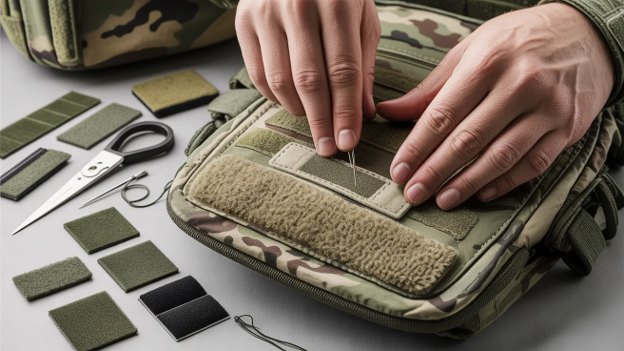
Method 1: Press-and-Stick (Standard Velcro Attachment)
The simplest method works on any gear with a compatible loop panel:
- Locate the loop panel on your gear (the soft, fuzzy surface)
- Orient your patch in the desired position
- Press firmly with your palm for 5–10 seconds
- Done, the hooks grab the loops and hold securely
Method 2: Iron-On Velcro for Patches (Adding a Loop Panel to Gear)
If your jacket, bag, or vest doesn’t have a loop panel, you can add one:
- Purchase iron-on loop tape (the soft side of Velcro)
- Cut to size, slightly larger than your largest patch
- Pre-heat iron to cotton/steam setting (no steam)
- Place the loop tape adhesive-side down on clean fabric
- Press firmly for 30–60 seconds, moving the iron slowly
- Let cool for 2 minutes before testing
- For permanent results: Reinforce with a simple stitch around the perimeter
Method 3: Sew-On Velcro for Patches
The most durable method recommended for heavy-use gear:
- Pin the loop panel in position on your fabric
- Straight-stitch around the perimeter with a heavy-duty thread (polyester recommended)
- Add an X-stitch across the center for maximum hold
- Attach your patch to the sewn loop panel
Method 4: Adhesive-Backed Velcro Patches
Some velcro patches come with a peel-and-stick adhesive on the hook side. These work on:
- Smooth plastic surfaces (helmets, hard cases)
- Rigid tactical gear with no sewn panel
- Temporary applications
Note: For fabric applications, always reinforce adhesive Velcro with stitching, adhesive alone will fail with washing and heavy use.
How to Make Velcro Patches
There are two practical routes on how to make your own custom patches:
Option A: Order Custom (Recommended for Best Results)
For professional, durable, full-color patches, ordering custom from a patch manufacturer is by far the most cost-effective and reliable approach, even for small quantities.
Get a free quote for custom velcro patches
Option B: DIY with a Cricut or Embroidery Machine
Using a Cricut to make velcro patches:
- Design your patch artwork in Cricut Design Space
- Cut the design from iron-on HTV (heat transfer vinyl) or felt
- Layer colors as needed and heat-press onto a patch blank or felt base
- Cut hook velcro tape to size and either:
- Hot-glue to the back of the patch, or
- Use iron-on Velcro (Velcro brand “Sticky Back” fabric tape)
- Optionally, stitch around the perimeter for durability
Using an embroidery machine:
- Create or download an embroidery design file (DST, PES, etc.)
- Embroider onto twill fabric or a pre-made patch blank
- Cut out the patch with a hot cutter or die press to seal edges
- Iron or sew hook velcro to the backing
Honest take: DIY velcro patches work great for quick crafts and one-offs, but for anything that needs to look professional or hold up to hard use, custom-manufactured patches are the right call. The thread work, color accuracy, and backing bond simply can’t be matched by home equipment.
How to Clean Velcro Patches
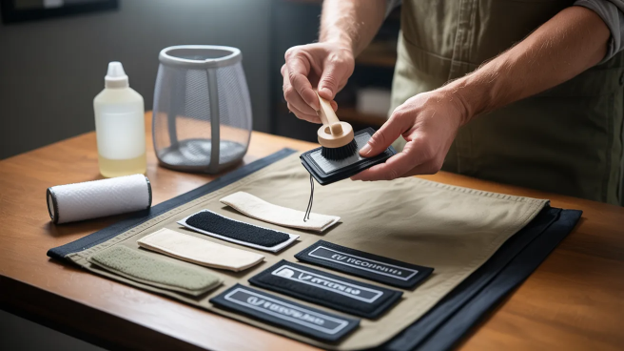
Velcro patches are generally low-maintenance, but proper care keeps them looking sharp:
Embroidered Velcro Patches
- Machine wash: Cold water, gentle cycle, inside a mesh laundry bag
- Detergent: Mild: avoid bleach and fabric softener (softener coats the hook fibers)
- Drying: Air dry flat; avoid high heat, which can warp the backing
- Before washing: Remove patches from gear to prevent lint buildup in the hooks
PVC / Rubber Velcro Patches
- Hand wash preferred: Warm soapy water and a soft brush
- Machine wash: Cold, gentle, but PVC can trap water under the patch
- Never: Put PVC patches in the dryer, heat can warp the rubber
Keeping Velcro Hooks Clean
Over time, lint and fabric fibers collect in the hook side, reducing grip. To restore:
- Use a stiff-bristle brush or toothbrush to brush out embedded lint
- Use a fine-tooth comb to run through the hooks and pull out fibers
- For stubborn debris, use tape or a lint roller pressed and peeled repeatedly
- Avoid: Submerging velcro in water with heavy soap residue
Buying Guide: What to Look for When Ordering Velcro Patches
Whether you’re buying off-the-shelf or ordering custom, here’s what separates quality patches from cheap ones:
Key Quality Indicators
| Feature | What to Look For |
| Thread coverage | 75–100% for premium embroidered patches (not sparse/gappy) |
| Edge finishing | Merrowed (overlocked) edge or hot-cut for clean, fray-free borders |
| Backing bond | Velcro sewn or heat-bonded, not just glued on the back |
| Color accuracy | Pantone-matched or color-proof approval before production |
| Backing type | Hook side (rough) on the patch back is standard; confirm before ordering |
| Size accuracy | Manufactured to spec within 1/8″ |
| PVC thickness | 3mm+ for durability; thin PVC cracks and peels |
Common Sizes Reference Chart
| Size | Common Use |
| 1″ × 4″ | Name tapes, rank strips |
| 2″ × 2″ (square) | Morale patches, hat patches, mini patches |
| 2″ × 3″ | Flag patches, standard morale patches |
| 3″ × 4″ | Chest patches, large morale |
| Round 3″ | Shoulder insignia, traditional unit patches |
| Round 2″ | Cap patches, mini crests |
| Large 4″+ | Back patches, jacket patches |
Where to Buy Velcro Patches in the USA
If you’re searching “velcro patches near me” or “where to buy velcro patches,” your best bet in the USA is an online custom patch manufacturer that offers:
- No minimum orders
- Free design assistance
- U.S.-based customer support
- Fast domestic shipping
The Eagle Patches serves all 50 states with competitive pricing and no minimum order requirements.
Frequently Asked Questions
What are velcro patches called?
Velcro patches go by several names: hook-and-loop patches, morale patches (in tactical contexts), loop-back patches, or simply velcro-backed patches. “Velcro” is technically a brand name for hook-and-loop fasteners, but it’s become the universal common term.
How do Velcro patches work?
A velcro patch has a hook side (small, rigid plastic hooks) bonded to its back. This presses against a loop surface (soft, woven fabric loops) on your gear. The hooks catch the loops and create a secure bond. Press to attach; tug firmly to remove.
What kind of patches stick to Velcro?
Any patch with a hook backing (the rough side of hook-and-loop tape) will stick to a velcro loop panel. Look for patches listed as “velcro-backed,” “hook-backed,” or “loop-compatible.” Embroidered, PVC, woven, and reflective patches all come in velcro backing options.
How do I attach Velcro patches to fabric without sewing?
You can use iron-on velcro loop tape applied to your fabric surface, then press your hook-backed patch onto it. For gear that can’t be ironed, adhesive-backed loop tape (peel-and-stick) works but reinforce with stitching if the gear sees heavy use.
How do I put Velcro patches on a backpack?
If your backpack has a loop panel (the soft, fuzzy square or rectangle on the front), simply press your patch onto it. If it doesn’t, iron or sew a loop panel onto the front pocket area, then attach your patch.
Where to get velcro patches made?
The Eagle Patches makes custom velcro patches with no minimum order, free artwork support, and a range of styles, including embroidered, PVC, woven, and reflective options.
Can I order custom Velcro patches with no minimum?
Yes. At The Eagle Patches, you can order custom velcro patches with no minimum, even a single patch. This is ideal for personal projects, gifts, prototypes, and small unit/team orders.
Why does the military use Velcro patches?
The military uses Velcro patches because they allow soldiers to quickly swap insignia between uniforms, add or remove patches for different missions (including removing all identification for covert operations), and comply with changing uniform standards. The system is fast, damage-free, and highly durable.
How to make Velcro patches with a Cricut?
Design your patch in Cricut Design Space, cut from iron-on HTV or felt, heat-press onto a patch base, and attach iron-on hook velcro to the back. See the full DIY velcro patch guide above.
How to embroider Velcro patches?
Embroider your design onto twill fabric using a home or industrial embroidery machine, hot-cut or merrowed the edge, then iron or sew hook velcro tape to the backing.
How to attach velcro patches to caps?
Press your hook-backed patch firmly onto the loop panel on your hat’s front crown. If your cap doesn’t have a loop panel, you can sew or iron on a small loop panel and then attach the patch.
Are Velcro patches permanent?
No, that’s their biggest advantage. Velcro patches are fully removable and repositionable. They can be moved between different pieces of gear indefinitely. The patch itself is permanent once manufactured, but its attachment is not.
What’s the difference between Velcro patches and iron-on patches?
Velcro patches have a hook-and-loop backing and are fully removable/swappable. Iron-on patches use a heat-activated adhesive and are meant to be semi-permanent or permanent on fabric. Velcro is better for gear you want to update; iron-on is better for clothing you want permanently decorated.
How to add Velcro to patches I already have?
If you have existing patches without velcro backing, you can iron or sew hook velcro tape to the back. Use iron-on hook tape (cut to size), cover the back of the patch, and press with a hot iron. For durability, add a few stitches around the perimeter.
What is a velcro board for patches?
A velcro patch board is a display panel made entirely of loop material (the soft side of velcro) stretched over a frame or backing. It lets you mount and display your patch collection on a wall. Great for collectors, military display cases, and tactical gear rooms.
Get Your Next Project Started With Swappable Patches
Whether you’re a military professional who needs reliable uniform identification, a tactical enthusiast building out your kit, a K9 handler kitting up your service dog’s harness, or someone who just wants to make their backpack uniquely yours, velcro patches are the most flexible, durable, and satisfying way to do it.
The combination of instant swap-ability, professional quality, and unlimited customization makes velcro patches a cornerstone of gear culture in the United States. And with options ranging from large military orders to single custom patches with no minimum, there’s never been a better time to get exactly what you need.
Ready to order? The Eagle Patches offers custom velcro patches in every style, embroidered, PVC, woven, and reflective, with free design support and no minimum order.