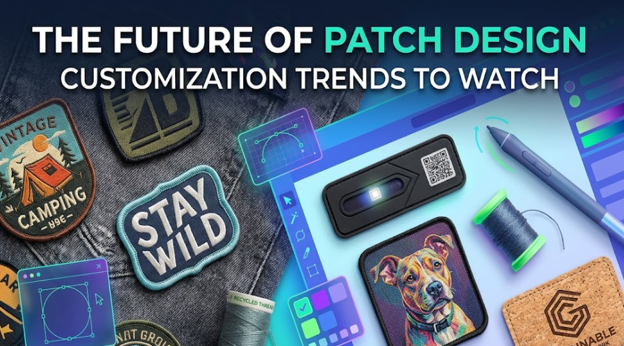
A custom patch has long been a way of communicating without words. The shield patch on the arm of a jacket, the name tape on a uniform, and the chenille letter on the varsity hoodie all tell a story before you even know what the patch says. Even in the modern-day world, custom patches USA are still a trendy personalization tool.
What has changed is how rapidly and accurately that communication is accomplished. The custom patch design trends that will dictate the future of the industry have less to do with one trending material and everything to do with how the patch gets made from concept to completion.
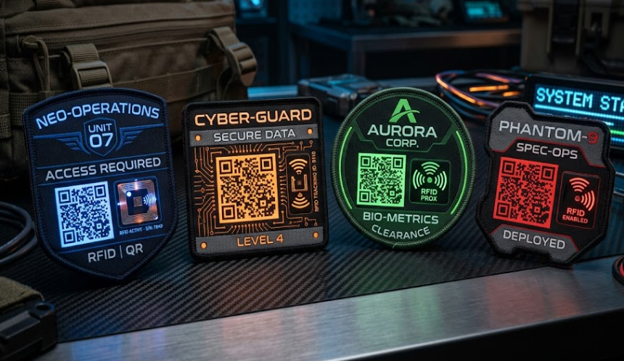
The digital revolution, advanced proofs, sustainable materials, and modularity are combining to make patch customization easier than ever before. With patches now coming with futuristic designs, QR codes, and RFID, it has become easier for companies to enhance their branding and for artists to share their work.
This guide takes a look beyond the current seasonal colors and materials to the forces driving where custom patches USA customers will be headed next.
Why Patch Customization Is Entering a New Phase
Personalized clothing and merchandise have been in development for years, but personalized patches are gaining popularity now due to their unique ability to solve a problem that traditional methods of personalization such as printing and embroidery fail to address.
The designs of custom patches need to be created once, manufactured in bulk, and attached to multiple clothes without requiring any change on the assembly line for the main product.
This is precisely the reason behind personalized patches’ transition from a minor craft item to an integral part of school uniforms, police uniforms, motorcycle clubs, corporate teams, and even fashion labels.
The next step in this shift is not about more patches. It involves smarter patches: patches that can be more easily prototyped, quickly approved, less expensive to produce in small or bulk batches regardless, and made from materials that withstand actual wear and tear.
AI-Assisted Patch Design and Digitizing Are Speeding Up Approval Cycles
By far the most significant operational change is AI-driven digitization. The process of transforming a design into a digitized file was an extremely laborious one that needed a professional digitizer, particularly when it comes to intricate artworks with fine lines or gradient shading.
AI-powered technology is capable of recognizing the artwork, detecting problems in terms of stitch density, and creating a usable file much faster and easily than the human-based process, thus reducing the difference between a first concept and a finished custom patch design with a small or no fee at all.
It becomes highly relevant to brands working on rapid iteration cycles. For example, a streetwear brand trying out three versions of their logo, a college looking to update its mascot patch design, or even an organization introducing a badge for a new department can now expect to have a realistic preview available in just one day’s time instead of a whole week.
The use of AI embroidery digitizing is not meant to eliminate the manual work involved in finishing the patch. However, it eliminates all the guesswork involved, and it is quickly becoming the standard first step for any serious custom patch manufacturer.
The other thing that comes along with that is the increase in the use of digital proofing, whereby the buyer gets to approve of the rendered mock-up, with accurate color of threads, type of backing, and even border, before the first stitch is ever put into the design.
There will be very few surprises upon delivery, resulting in fewer orders, saving valuable time and money. Customers booking to see exactly how their artwork will translate into thread and material can request a free mockup proof.
For more detailed versions of how the final design of your bespoke patches would look, use Eagle Patches USA’s embroidery digitizing service or start from a raw logo file using the vector conversion service.
Sustainable Patch Materials: From Niche to Expected
Eco-conscious sourcing for patches has been slower to develop than the sources used for clothing overall, although now it is rapidly advancing. Recycled polyester thread, organic cotton twill base material, and even water-based glue are increasingly being incorporated into patches due to customer demand and corporate CSR sustainability initiatives.
Sustainable patch materials are no longer an expensive luxury product that only environmentally conscious companies use. This is especially true when it comes to purchasing large amounts of uniforms from companies that were thoroughly researched on their production processes beforehand.
In the case of organizations that have to undertake large-scale uniform rollouts, the switch is also connected with durability. Eco-friendly patches made out of recycled high-quality thread not only serve as marketing tools but also are long-lasting.
They are great at retaining colors and shape throughout several washes, which is crucial when it comes to safety, hospitality, and school uniforms that have to withstand multiple washings.
Modular and Interchangeable Patch Backings
A particularly fascinating evolution in patch customization is the advent of modular clothing, which uses a piece of clothing with Velcro hook-and-loop patches that can accept any number of patches at a time rather than being sewn on one particular piece of clothing.
It all began with tactical wear and military-adjacent apparel, which required flexibility to swap patches easily. However, now, it is becoming increasingly common even in mainstream fashion clothing and corporate uniforms, wherein workers can exchange their patches without having to replace their whole piece of clothing.
Modular patches and interchangeable patches offer consumers a workable solution to a recurring dilemma in that there is no need to buy an entire new uniform or jacket when the membership of a team has changed or there is some seasonal campaign or achievement being promoted.
The backpack, vest, or jacket that comes with a hook-and-loop patch now functions as a reusable canvas instead of just a one-time-use product. This approach is gaining in popularity among retail buyers as well as budget-conscious institutions.
Any individual working on a modular system can use the example of adding a hook-and-loop patch to a custom morale patch, which is purpose-built for swappable wear.
Hybrid Decoration and On-Demand Small Patch Batches
Not all designs require the texture and depth of a traditional patch, and it is now common practice to blend methods in one range of apparel. Combining custom embroidered patches that add texture on the front with a flat DTF transfer on the back of the same garment brings out an interesting look.
This allows for a designer to manage costs and time while still retaining the added value that a patch can bring to the highlight of the design. This combined strategy is quickly turning into a characteristic aspect of how middle-sized apparel brands plan their upcoming season.
At the same time, the barrier for trying out a new design has been lowered. The reduced minimum orders and quick turn-around allow the brand to not necessarily have to make a thousand-piece run just to see how a certain patch will look.
The ability to use small-batch or on-demand manufacturing allows the school to test out their new spirit patch, the start-up to try out a certain limited logo design, or the motorcycle group to make their patches for a one-time event without the risk associated with bulk ordering alone.
Comparison of decoration techniques for a varied range of items can be done via The Eagle Patches USA’s guide on DTF transfers vs. custom patches, helping you choose the right one.
Custom Patch Trends: What Is Changing and Why It Matters
| Trend | What It Solves | Who Benefits Most |
| AI-assisted digitizing | Faster proofs, fewer manual errors | Brands iterating on logo designs |
| Digital proofing | Fewer costly reorders | Bulk and uniform buyers |
| Sustainable materials | Meets consumer and corporate ESG goals | Retail brands, corporate programs |
| Modular and interchangeable patches | Long-term reusability, reduced reorders | Uniform programs, outdoor and tactical gear |
| Hybrid decoration (patch plus DTF) | Cost control on multi-element designs | Streetwear and apparel labels |
| Low minimum, small-batch runs | Lower financial risk for testing | Startups, schools, clubs, event organizers |
What This Means for Brands Sourcing Patches in the Year Ahead
These changes do not require the organization to make radical modifications to its process of designing or ordering patches. However, the questions that an organization should ask from the custom patch manufacturer have changed.
The buyer must inquire about the inclusion of a digital proof before the commencement of the production process, if there are any materials used for sustainability for a particular patch, and if the patch is best suited with a modular hook-and-loop backing. The importance of material selection is still just as relevant as ever.
Chenille patches still rule the realm of varsity and collegiate logo concepts, PVC patches still hold their strength as being weatherproof and durable logos, 3D embroidered patches still provide the classic raised finish, and woven patches still reign supreme for the fine detail that embroidery simply cannot achieve.
The difference now is not so much which type of patch wins out, but rather how fast a brand can get from conception to final production and proofing of its patch. An understanding of how much custom patch pricing per unit varies based on materials and quantity is a good first step before committing to your design.
Frequently Asked Questions
What are the biggest custom patch design trends to watch right now?
Significant shifts include AI streamlining production timelines, sustainable materials as standard, and modular patch systems allowing adaptability, emphasizing efficiency over seasonal aesthetics in custom patch design trends.
How is AI changing custom patch manufacturing?
AI tools accelerate digitizing artwork into stitch-ready files, speeding up proofing, reducing errors, and enabling quick design variations, while skilled staff ensure final quality decisions are met.
Are sustainable materials actually available for custom patches?
Recycled polyester, organic cotton, and low-impact adhesives are common in patches. Availability and cost differ, so inquire about sustainable options during quoting for best results.
What is a modular or interchangeable patch system?
A modular patch system uses Velcro backing patches on garments for easy attachment and removal, originally in military gear but now in uniforms and fashion, allowing versatile designs without reordering.
Update Your Patch Collection with Evolving Patch Designs
Patches are not getting any less relevant as customization becomes increasingly advanced, but they are getting easier to design and create successfully the first time around.
The custom patch design trends that should be followed in the coming year include those related to speed, accuracy, and flexibility: AI-powered digitization for shortened approvals, digital proofs for avoiding mistakes and the need for reorders, sustainable materials that actually live up to consumers’ expectations, and systems that allow for a garment to be updated instead of having to start completely from scratch.
While traditional materials like chenille, PVC, and embroidered threads will not be disappearing anytime soon, the way in which patches using them are designed, proofed, and manufactured is only getting faster and less risk-averse.
Browse real examples of recent work from The Eagle Patches USA’s portfolio for inspiration before starting a new design. Ready to bring a new design to life with a reliable manufacturer with fast proofing and flexible production?
Get a custom quote and see how quickly a concept can become a finished patch. Have questions about which patch style or backing fits a specific project? Contact the Eagle Patches USA team directly for guidance before placing an order.