A small badge that introduces a person and may be worn on a livery or jacket! is that small USAF patch, or to show what team you belong to and what job you do, you can put it on a bag.
The Air Force of the United States uses many patches. Each patch tells a short story. Each patch also follows a rule about where it goes.
This guide covers everything about a USAF patch. You will learn the meaning, the types, the materials, and the correct USAF patch placement and af patch placement tips.
What Is a USAF Patch?
A USAF patch is a fabric military badge. It is sewn on, stuck on, or attached with hook and loop backing. Some patches show a squadron. Some show a rank. Some show a mission. Each patch has its own shape and colors. It carries history and pride, not only looks, and it also promotes teamwork in one small piece of cloth.
A Short History of USAF Patches
Patches, for a long time, have been part of Air Force life. Pilots wore hand-sewn badges early on their flight jackets. These patches at first were simple. They showed a squadron number or a small picture that meant something to the crew.
Over time, patches grew more colorful. Units began to add mottos, animals, and symbols that told a bigger story. Still today, that same idea is followed by a USAF patch. Art that carries a big piece of pride, it is a small piece of art.
Modern patches have tighter stitching, and they use better thread and stronger backing. The story stayed the same, that they tell.
Materials Used to Make a USAF Patch
A USAF patch can be made from different materials. Each material gives a different look and feel.
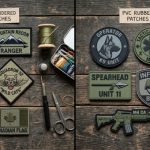
- Embroidered patches: in fine detail, threads are stitched, making them small icons and great for text.
- Woven patches: best for very fine detail because their flat and smooth traits make them flawless for small letters.
- PVC patches: good for outdoor use because they are rubber-like and fit for rugged gear.
- Leather patches: often used on caps because they look classic and sturdy, even on jackets.
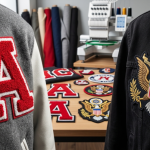
- Chenille patches: used for varsity-style because they look thick and fluffy.
Most official-style squadron and name patches use embroidered or woven styles.
What Do the Colors and Symbols on a USAF Patch Mean?
Colors and symbols are not picked at random. Each one is chosen to say something about the team or the mission.
| Color or Symbol | Common Meaning |
| Blue | Sky, Air Force |
| Gold/Yellow | Honor, success, excellence |
| Red | Courage, energy, sacrifice |
| Wings | Flight, freedom, speed |
| Stars | Rank, goals, state |
| Eagles/Hawks | Strength, focus, power |
Types of USAF Patches
There is not just one kind of patch. Each type has its own job. Here are the main types you will see.
1. Squadron Patches
A squadron patch shows, a person flies or works with, which team. Its own design and its own colors, each squadron has.
2. Name Tapes
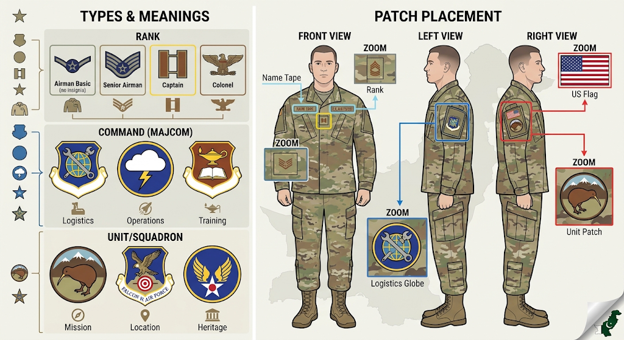
A name tape is a strip patch. It shows the last name of the airman. It usually sits above the front pocket.
3. Rank Patches
The level of a person is what rank patches show in the Air Force. Stripes, chevrons, or stars, these patches use to show rank.
4. Flight and Mission Patches
Special flight and mission is what Flight patches mark a pilot’s assignment or even crew. Pilots often wear these with pride on flight suits and jackets.
5. Morale Patches
Morale patches are fun and personal. Airmen use these off duty. They show humor, hobbies, or unit spirit in a light way.
6. Unit and Command Patches
These patches show a bigger group, like a wing or a command. They often sit on the shoulder of the uniform.
7. Novelty and Custom USAF-Style Patches
Fans, families, and small shops order inspired by Air Force style custom patches. On bags, vests, and jackets, these can be worn.
Quick Table: USAF Patch Types at a Glance
| Patch Type | Main Purpose | Common Placement |
| Squadron Patch | Shows team or unit | Left shoulder or chest |
| Name Tape | Shows last name | Above right or left pocket |
| Rank Patch | Shows rank level | Collar or shoulder |
| Flight Patch | Marks a mission or crew | Chest or sleeve |
| Morale Patch | Shows humor or spirit | Chest panel, bag, or vest |
| Unit/Command Patch | Shows larger group | Right or left shoulder |
USAF Patch Placement: Where Patches Go
Getting USAF patch placement right matters. A patch in the wrong spot can look messy or break uniform rules.
Official duty uniforms follow strict Air Force Instructions for exact patch position. Always check the newest instruction for real duty uniforms.
| Uniform Area | Typical Patch | Placement Note |
| Left chest | Name tape or squadron patch | Centered above the pocket seam |
| Right chest | Unit or flag patch | Balanced with the left side |
| Left shoulder | Unit or command patch | Below the shoulder seam |
| Right shoulder | Overseas or mission patch | Below the shoulder seam |
| Back panel | Large morale or novelty patch | Centered, below the collar |
| Sleeve | Small flight or badge patch | Above the elbow line |
Tips for Clean USAF Patch Placement
- Measure twice before you cut, sew, or press any patch.
- Keep patches level with the seam line, not tilted.
- Leave even space between two patches on the same panel.
- Match thread color to the jacket or shirt fabric when sewing.
- Use a fabric marker to mark the spot before attaching.
AF Patch Placement Rules to Follow
The phrase af patch placement simply means the same thing as USAF patch placement, just shorter.
Follow these simple rules when placing a patch on a custom item, so it looks neat and lasts a long time.
- Rule 1: Place the main patch first, then add smaller patches around it.
- Rule 2: Keep at least one inch of space between two patches.
- Rule 3: Avoid placing a patch over a seam or a zipper line.
- Rule 4: Pick a backing that matches how often the patch will move.
- Rule 5: Always test the placement with pins before final attachment.
These rules keep a jacket, vest, or bag looking sharp and easy to read from a short distance.
Good placement also helps a patch last longer, since even spacing stops fabric from pulling or bunching up over time.
How Are USAF Patches Attached?
A patch can be attached in a few different ways. The right choice depends on how often it needs to come off.
| Backing Type | Best For | Easy to Remove? |
| Sew-on | Permanent uniform patches | No |
| Iron-on | Light fabric items, quick use | Somewhat |
| Velcro (hook and loop) | Patches that change often | Yes |
| Adhesive backing | Hard, smooth surfaces | Somewhat |
| Safety pin backing | Temporary events or shows | Yes |
Velcro backing is the top pick for collectors who like to swap patches often. It also matches many real USAF patch uniform styles.
Custom USAF-Style Patches vs Official Patches
Official patches follow strict Air Force rules for size, color, and wording. These are worn on active duty uniforms.
Custom USAF-style patches are made for fans, veterans, families, and shops. These follow the same look but are used on uniform patches, jackets, bags, or hats.
A custom patch gives full freedom over color, size, wording, and backing. This makes it a great choice for gifts and events.
Choosing the Right USAF Patch Size
Size changes how a patch looks and reads from far away. Pick a size that matches the item and the placement.
| Patch Location | Suggested Size Range | Notes |
| Name tape | 1 in x 4 in | Keep letters bold and simple |
| Chest patch | 2 in x 3 in | Good for logos and small text |
| Shoulder patch | 3 in x 4 in | Should sit fully on the shoulder panel |
| Back patch | 8 in x 10 in | Best for bold, simple art |
| Hat patch | 2 in x 2.5 in | Round or shield shapes work well |
How to Care for a USAF Patch
- Turn the item inside out before washing to protect the patch.
- Use cold water and a gentle cycle to keep colors bright.
- Avoid high heat when drying, since it can loosen threads.
- Check velcro backing often, since dust can weaken the grip.
- Store extra patches flat in a box, away from direct sunlight.
Good care keeps a patch sharp and bright for many years of wear.
A little care today saves you from a faded or peeling patch down the road, which matters most for keepsake items.
Common Mistakes in Patch Placement
- Placing a patch too close to a seam, which causes bunching.
- Choosing a size too large for the panel, which looks crowded.
- Mixing too many backing types on one jacket, which wears unevenly.
- Skipping a test fit before sewing or ironing a patch on.
- Ignoring fabric type, which can cause an iron-on patch to peel off.
Avoiding these mistakes saves time, money, and a favorite jacket or bag.
USAF Patch Placement on Bags, Hats, and Vests
Patches are not only for uniforms. Many fans place USAF-style patches on everyday gear too.
| Item | Good Patch Size | Placement Tip |
| Backpack | 3 in to 5 in | Front flap, centered |
| Baseball cap | 2 in to 3 in | Front panel, above the brim |
| Tactical vest | 2 in to 4 in | Chest panel with velcro backing |
| Denim jacket | 3 in to 6 in | Back panel or upper sleeve |
Velcro backing works best for gear you plan to swap often, like vests, hats, and bags used at different events.
For fixed gear like a jacket you keep long term, sew-on backing paired with a strong uniform patches style tends to hold up better.
Frequently Asked Questions About USAF Patches
Where should a USAF patch go on a jacket?
Most patches sit on the chest, shoulder, or back panel. Good usaf patch placement keeps the design level and centered.
Can I make a custom USAF-style patch?
Yes. Many fans and shops order custom patches in Air Force style for jackets, bags, and gifts.
What backing is best for a USAF patch?
Velcro backing works well for patches that need to change often. Sew-on backing works best for permanent wear.
How big should a USAF patch be?
Size depends on the spot. Chest patches are often small, while back patches can be much larger.
Do custom patches need to follow official Air Force rules?
Only real duty uniforms must follow official rules. Custom fan patches have more freedom with size and color.
How long does a custom USAF patch take to make?
Most orders take a short design proof step, then a production window before shipping to your door.
What is the most common USAF patch shape?
Round, shield, and rectangle shapes are the most common. A shape often matches the panel it sits on.
Can a USAF patch be washed?
Yes, most patches can be washed with care. Cold water and a gentle cycle help keep the patch looking fresh.
Get Your USAF Patches for Your Teams
A USAF patch is more than fabric and thread. It carries pride, teamwork, and a small piece of history. Knowing the types, materials, and placement rules helps you wear or design a patch the right way.
Whether you need help with USAF patch placement, af patch placement, or a full custom design, our team is ready to help from idea to finished patch.
Reach out to The Eagle Patch USA team to get a free quote or check current options on our pricing page to start your order today.