That sewn-on patch did its job. Maybe it’s outdated. Maybe it’s crooked. Maybe your jacket is getting a new vibe. Whatever the reason, you can remove it without shredding the fabric or turning the area into a fuzzy mess. The secret is simple: cut thread, not cloth.
How to Remove Sewn On Patches
Grab the Right Tools So You Don’t Fight the Stitches
You don’t need a fancy kit. A seam ripper is the real MVP here. Small scissors help too, and tweezers make it easier to pull out tiny thread bits. If you have a lint roller, keep it close. After patches come off, loose threads love to cling like they pay rent.
If the patch is thick, like an embroidered patch or chenille patch, you’ll usually see strong thread around the border. That’s normal. It just means you’ll be cutting more stitches.
Start From the Inside So the Fabric Stays Clean
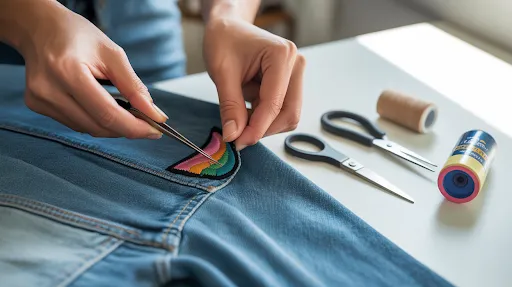
Turn the garment inside out. Most sewn-on patches are stitched from the outside, so the thread pattern is often easier to spot and cut from the back. You’ll see little loops or straight stitch lines.
Slide the seam ripper under a stitch and cut it. Then move a little and cut another. You don’t need to cut every single stitch from the start. Cut a few inches of stitching, then flip the garment to see if the patch edge starts lifting.
If the patch doesn’t lift, go back inside and cut more stitches. Slow and steady here saves your fabric.
Work Around the Edge, Not Through the Middle
Once a section loosens, gently lift the patch edge with your fingers. Don’t yank. If it pulls hard, there are still stitches holding it.
Keep going around the border, cutting stitches as you meet resistance. If the patch is a big one, or it was stitched twice around, you may need to do two passes. This is common with patches on uniforms, backpacks, and jackets that were meant to last.
What if the Patch Was Stitched and Also Ironed on
Sometimes people do both for extra hold. If your patch lifts a little but still feels glued down, it may have iron-on adhesive underneath.
In that case, stop pulling. Heat it gently. Place a thin cloth over the custom patch area and press with an iron for a short round to soften any adhesive. Then try lifting again slowly. If it still resists, don’t force it. Remove what you can, then deal with any leftover glue after the patch is off.
Clean Up the Leftover Threads and “Patch Shadow”
After the patch comes off, you’ll usually have two things left: loose threads and a faint outline where the fabric was protected by the patch. That outline is normal, especially on older jackets. It’s basically a tan line for clothing.
Pick out leftover threads with tweezers. Then smooth the area with your fingers and hit it with a lint roller. If the fabric looks a bit puckered, a light press with an iron can help it relax.
If you’re planning to put a new patch on the same spot, this is the best time to prep it. Make sure the area is smooth and stable, especially if you’re switching patch styles.
Woven patches show small details well. PVC patches handle rough use. Leather patches give a premium look. Sequin and applique styles are more fashion-forward. Sublimated patches are great for full-color artwork. Whatever you choose, a clean surface makes the new patch sit better.
If you’re replacing the patch with a fresh sew-on, this “How to Sew a Patch on a Jacket and Make It Look Awesome” guide can help you stitch it neatly so it looks intentional, not like a last-minute fix.
FAQs
Can you remove a sewn-on patch without a seam ripper?
You can, but it’s harder. Small scissors can work, but the seam ripper is safer because it cuts thread without slicing fabric.
Will removing a patch leave holes?
Sometimes, yes, especially if the needle was thick or the fabric is delicate. Many fabrics settle after a wash and a light press, and the holes become less noticeable.
Why is there a faded outline after I remove the patch?
That’s normal wear and sun exposure. The patch covered the fabric, so the surrounding area aged differently. Washing and time can help blend it.
Can you reuse the same patch after removing it?
Often, yes, if the patch edge is still clean and the threads are not damaged. You may need to trim loose threads or re-finish the border.
What to do next
So, finally you are all good at grasping how to remove sewn on patches the clean way, without tearing fabric or getting rough with the seam. If you’re swapping an old patch for a new one, The Eagle Patches USA can help you create a replacement that matches your style and holds up on jackets, uniforms, bags, and workwear.