To keep the patch securely attached to the cloth with proper style and charm, it’s essential to know whether to use a sew-on or iron-on patch. If you want a quick, striking look at a lower cost, then go for an iron-on patch. However, if you’re targeting a custom patch on your clothing that will remain intact even after multiple washes, then opt for a sew-on patch.
Each type of patch offers unique benefits. Stick around, and we’ll share more details about each one and help you decide which is ideal for you.
What is Iron On Patches
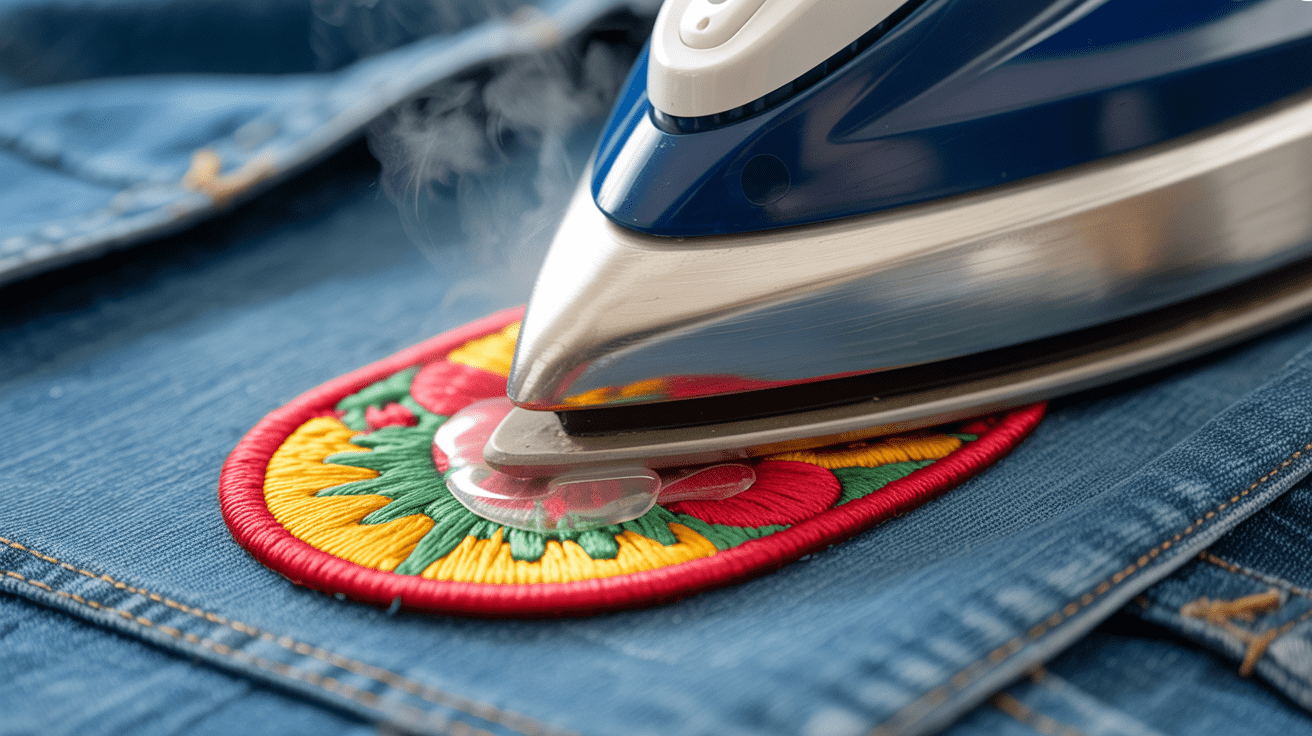
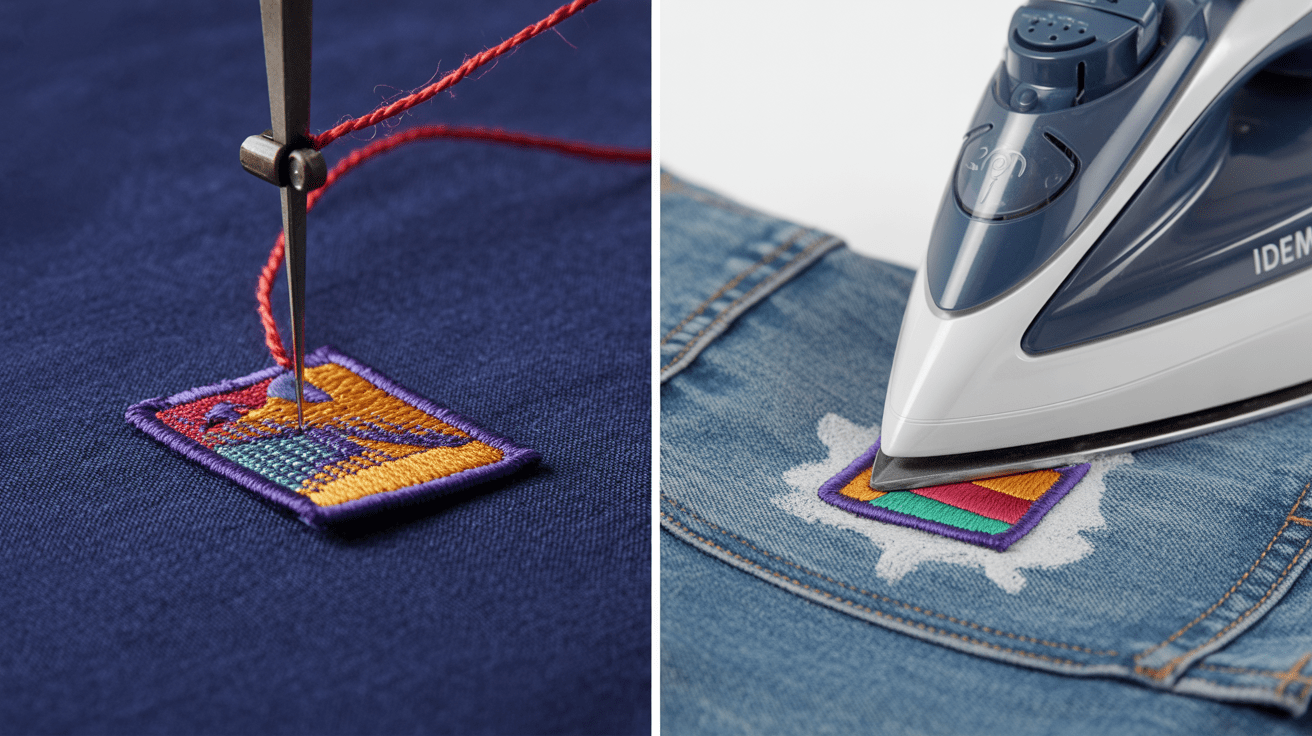
Iron-on patches use a heat-activated adhesive on the back. When you press them with an iron, the glue melts and bonds to the fabric.
Most patches use twill, cotton, or polyester blends on the front. Because these materials handle heat well and keep their colors bright. Many people choose iron-on patches because they stick fast and look clean.
Brands often add iron-on options to their merchandise, so customers can attach the patches at home with no tools. But iron-on patches come with a few drawbacks. They lose their grip faster than sew-on patches. If you remove them, the glue can leave marks on the clothing.
Pros of Iron-On Patches
- Heat activates the adhesive and creates a quick, firm bond.
- The patch attaches in seconds.
- Twill, cotton, and polyester fronts handle heat well.
- The melted glue spreads evenly.
- Easy at-home application makes iron-ons a popular choice for merch drops.
- Production usually costs less than sew-on alternatives.
Cons of Iron-On Patches
- The adhesive weakens after repeated hot washes.
- Edges loosen when the fabric stretches or bends often.
- High heat can scorch delicate materials like nylon or silk.
- Glue residue remains after removal and rarely washes out.
- Outdoor use, heavy movement, or friction causes faster peeling.
- Sun and constant heat exposure shorten the patch’s lifespan.
What is Sew On Patches
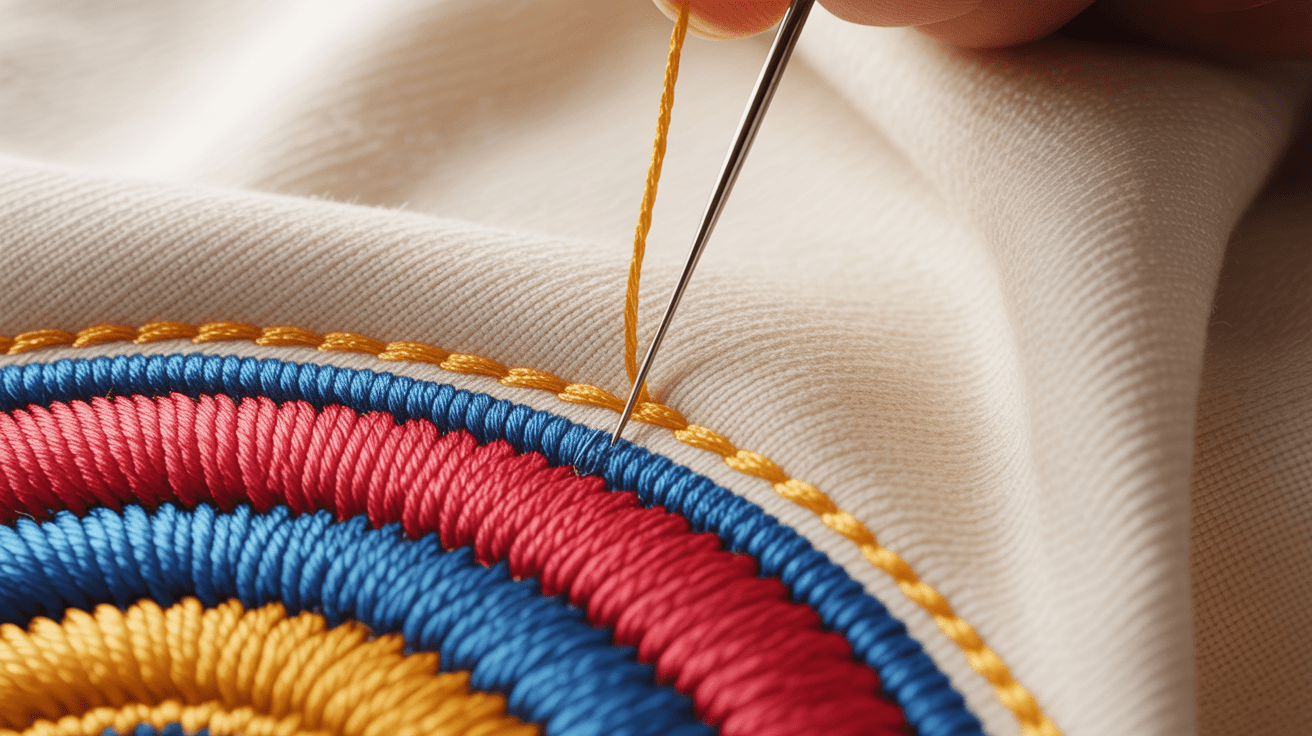
Sew-on patches attach to clothing or gear with stitching instead of heat or glue. Stitching creates a strong hold and gives the patch long-lasting durability. Makers can use any front fabric, premium silk, thick chenille, or highly textured materials. Because the patch never needs to go under high heat.
Many businesses choose sew-on patches for uniforms and branded clothing. The secure stitch shows professionalism and signals higher quality because the patch rarely comes off. However, attaching a sew-on patch usually requires basic sewing skill. The process also needs a needle, thread, or a sewing machine. Also, a single crooked stitch can affect placement or shape.
Pros of Sew-On Patches
- Strong stitching keeps the patch attached for years.
- No heat means no risk of damaging delicate or premium fabrics.
- Works on almost any material, including wool, fleece, canvas, and knits.
- Handles heavy use, outdoor conditions, and frequent washing.
- Allows creative textures like chenille, silk, velvet, and 3D embroidery.
- Often looks more premium because the patch sits cleanly without glue shine.
Cons of Sew-On Patches
- Requires sewing skill or tools, which slows down home application.
- Placement mistakes are harder to fix after stitching.
- Thick fabrics can be difficult to pierce with a needle.
- Takes more time than heat pressing or sticking an adhesive patch.
- Businesses must pay for sewing labor if the patch needs professional attachment.
Comparison on Sew vs Iron on Patches
If you’re choosing between sew-on and iron-on patches, here’s a quick table to help you pick your winner.
| Feature | Sew-On Patches | Iron-On Patches |
| Attachment | Stitching | Heat-activated glue |
| Strength | Very strong | Moderate |
| Wash Durability | High | Lower after many washes |
| Fabric Safety | Safe for all fabrics | Can damage delicate fabrics |
| Texture Options | Any texture | Only heat-safe textures |
| Removal | Hard to remove | Easy to remove but leaves residue |
| Tools Needed | Needle or machine | Iron |
| Skill Level | Requires skill | Easy for beginners |
| Time to Apply | Slow | Fast |
| Look & Quality | More premium | Clean and simple |
| Best For | Uniforms, outdoor gear, heavy use | Casual clothes, quick installs |
Should I Use Sew on or Iron on Patches
Both patch types stay in demand. Everyone uses them, solo creators, small teams, local clubs, and big organizations. The real winner depends on what you want to do.
For fast brand promotion or a quick fix on your gear, iron-on patches do the job with almost no effort. But for uniforms, long projects, or anything that must survive serious wear, sew-on patches rise above the rest and keep their strength for years.
FAQs
Can I wash my patch without it coming off?
Sew-on patches hold up to repeated washes. Iron-on patches last, but heat and friction over time can weaken the bond.
Can I put a patch on any fabric?
Sew-on patches work on almost all fabrics, including delicate and textured ones. Iron-on patches need heat-safe fabrics like cotton, denim, or polyester blends.
How long does it take to get my custom patches?
Most orders ship quickly. Small batches can be ready in just a few days, while larger orders may take a bit longer depending on quantity and complexity.
Order the Right Custom Patch from The Eagle Patches USA
Still unsure which patch suits your needs? No stress! Contact The Eagle Patches USA. Our team listens to your requirements, checks your budget, and guides you toward the best option.
Choosing us means teaming up with a crew trusted by customers across the USA. Why do so many rely on us? Because we offer a low MOQ of just 10 pieces and a fast turnaround that keeps every project moving.