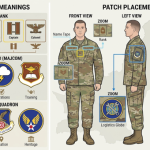
In the armed forces, OCP patches are not merely ornamental enhancements. They represent symbols of identity, accomplishments, and distinction. Among military patches, Operational Camouflage Pattern (OCP) patches are unique, providing consistency while offering practical advantages in both combat and non-combat situations.
But what makes OCP patches so crucial? Whether you’re a service member on active duty or a military enthusiast, knowing the correct OCP patch placement is essential for respecting military decorum.
To understand proper OCP patch placement, keep reading. This guide will share everything you need to know about positioning patches on the shoulder and chest, the different types of OCP patches, and their significance, ensuring your uniform reflects both standards and pride.
Official Patch‑Placement Rules for OCP Uniforms
OCP patches aren’t just pieces of fabric. They carry identity, pride, and accomplishment. Knowing where to place each patch correctly keeps your uniform sharp, professional, and regulation-ready.
Shoulder Patches
The shoulder patches are where your story begins. The Unit or Shoulder Sleeve Insignia (SSI) sits proudly on the left sleeve, showing your current unit affiliation. On the right sleeve, the combat patch marks previous deployments and earned honors.
Aligning these patches correctly not only keeps your uniform sharp but also shows respect for the history and pride each patch represents.
Chest Tapes and Insignia
Across the chest, the name tape rests centered above the right breast pocket, while the “U.S. Army” branch tape sits above the left. Rank insignia finds its place relative to the name tape, ensuring the uniform looks balanced and regulation-ready.
Correct positioning here communicates professionalism at a glance and highlights the structure behind every detail of the OCP uniform.
Other Badges and Patches
Qualification badges, tabs, and other specialty patches complete the look. Each one has a spot, and each spot tells a story.
Placing them correctly ensures your uniform remains tidy, cohesive, and ready for duty, honoring both regulations and the hard-earned accomplishments of the wearer.
Common Violations and Mistakes in Patch Placement
One of the most frequent mistakes is misaligned shoulder patches. Patches that sit too high or too low immediately make the uniform look sloppy and out of regulation. Chest tapes are another common problem when they are uneven or inconsistently positioned, which can throw off the balance of the entire uniform.
Each patch has its own designated area, and stacking them or crowding the uniform undermines both appearance and compliance. Using non-regulation patches is another error. Patches that are the wrong size, pattern, or backing can compromise durability and take away from the professional look of the uniform.
Types of OCP Patches & When to Use Each
OCP patches come in different styles, each with its own purpose and method of attachment. Knowing which type to use ensures your uniform stays professional, durable, and regulation-compliant.
| Patch Type | Description | Best Use |
| Hook-and-Loop (Velcro) | Easy to attach and remove, very common on modern OCP uniforms | Ideal for patches that need frequent changing or temporary placement |
| Sew-on | Permanently stitched onto the uniform | Best for patches that are meant to stay in place long-term |
| Specialty Patches | Includes duty identifier tabs, morale patches, and authorized unit-specific patches | Use only authorized patches to maintain compliance and show specific achievements |
FAQs
Can I move a patch after I’ve sewn or Velcroed it?
Yes, patches can be repositioned carefully. Sew-on patches may need to be restitched to hold securely, while Velcro-backed patches can be gently detached and realigned without damaging the hook-and-loop surface.
How do I wash my OCP uniform with patches?
Wash your OCP uniform in cold water on a gentle cycle to protect the patches. Velcro patches should be fastened before washing to prevent snagging, and sewn-on patches should be checked for loose threads afterward.
What should I do if my unit requires a patch in a non-standard location?
If your unit has specific placement instructions, follow them while keeping the rest of your uniform aligned and professional. Make sure any custom placement does not interfere with regulation-required patches and maintains clear spacing.
Complete Your OCP Look with the Eagle Patch USA
Proper OCP patch placement is essential, but without high-quality patches, you risk lifting or peeling after every wash. If you want patches that stick securely and maintain a sharp, regulation-ready look, The Eagle Patch USA is the right choice.
We provide all the essential armed forces patches with very low minimum order quantities. Being based in the USA allows us to deliver faster than other suppliers, ensuring your patches arrive on time and ready to use.