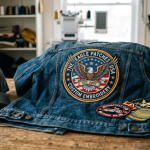
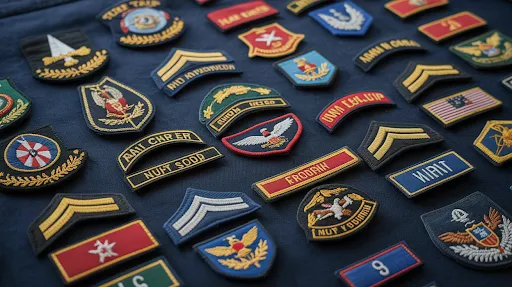
A uniform shoulder patch is basically your team’s “hello” before anyone says a word. It signals who we are, what we do, and where we belong. The trick is keeping it clean and readable, because a shoulder patch is not the place to cram your whole life story.
How to Design a Uniform Shoulder Patch
Start With the One Job the Patch Must Do
Before we pick colors or shapes, we decide the patch’s main message. Is it for a company uniform, a security team, a fire and rescue unit, a club, or a school group? Most uniform shoulder patches need to show one or two of these things: organization name, department, city/state, unit number, or a simple emblem.
If we try to include everything, we end up with a patch that looks busy and reads like tiny homework. Simple wins.
Choose a Size and Shape That Fits the Sleeve
Most uniform shoulder patches land in the 3 to 5 inch range. That size sits well on sleeves without folding over seams or fighting jacket seams. Shape matters too. Shields and circles are classic for uniforms. Rockers (curved top or bottom tabs) are great when we want to add “SECURITY” or a city name without crowding the main patch.
We should also think about left vs right sleeve placement. Some teams mirror patches or keep one sleeve for a flag and the other for the unit patch. Planning that now keeps the final uniform looking intentional.
Keep the Text Readable From a Few Steps Away
A shoulder patch has to work at real-life distance. If we can’t read it from 4 to 6 feet away, it’s too small or too detailed. Use short wording, thicker fonts, and enough spacing between letters. Blocky, clean fonts beat fancy scripts every time on embroidered patches.
If we need a longer name, a rocker or a second line of text is better than shrinking everything down. Tiny letters might look “fine” on a screen and then show up in thread like a secret code.
Use Fewer Colors, With Stronger Contrast
Uniforms already have a lot going on, so our patch should feel crisp, not chaotic. Pick 2 to 4 main colors whenever possible. Contrast is the real hero here, like light text on a dark background or dark text on a light background.
If the uniform is dark navy or black, a bright border can help the patch stand out. If the uniform is light, a darker border keeps it from looking washed out. Clean contrast is what makes the shoulder patch look sharp in person and in photos.
Pick the Right Patch Type for the Job
This is where function meets style. Embroidered shoulder patches are the go-to because they look classic and professional. If the design has tiny details or small text, woven patches can be a better choice because they hold fine lines more clearly.
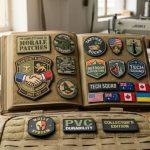
For heavy-duty outdoor use, PVC patches handle weather and rough wear really well. If the patch is more about school spirit or varsity style, chenille patches give that bold, fuzzy look. Leather patches can work for a premium uniform vibe, but we keep the design extra simple so it stays readable.
If we’re unsure, we can start with the design first, then match it to the best material. This How to Design Your Own Custom Patch (Even If You’re Not a Designer) guide can help if we’re building the artwork from scratch.
Choose the Backing That Matches How the Uniform is Used
Uniform shoulder patches are often hook-and-loop (Velcro) so they can be removed for washing or swapped by role. Sew-on is the most permanent and durable choice for daily wear. Iron-on can work, but for uniforms that see real movement and frequent washing, we usually recommend sew-on or hook-and-loop.
If the patch is going on tactical gear, bags, or outerwear, hook-and-loop is usually the winner.
FAQs
What size should a uniform shoulder patch be?
Most are 3 to 5 inches, depending on sleeve space and how much text we need.
What’s better for uniforms, embroidered or PVC?
Embroidered is the classic uniform look. PVC is great for harsh conditions and outdoor use. If we have tiny details, woven can be the clearest.
Should we use Velcro or sew-on backing?
Velcro is best if we need removable patches or role swaps. Sew-on is best for permanent, long-term wear.
Can we put a lot of text on a shoulder patch?
We can, but we shouldn’t. Short words, larger letters, and strong contrast look more professional and stay readable.
Get Your Uniform Patch Ready!
Now we know how to design a uniform shoulder patch that looks clean, reads fast, and actually fits the sleeve. If you want to turn your design into production-ready patches, our ordering steps are laid out here: How to Order Custom Patches from The Eagle Patches USA.
When you’re ready, send us your idea, logo, or even a rough sketch, and The Eagle Patches USA team will help you shape it into a uniform shoulder patch that looks official, not overworked.