Scout patches are basically the scoreboard you can wear. Earned it? Stitch it. The only real challenge is doing it neatly so it stays on through campouts, laundry days, and the classic “I forgot my uniform until last night” scramble.
How to Sew On Scout Patches
Confirm Placement Before You Thread a Needle
Before you do anything, check the official placement rules for your troop or council. Some patches go on the right sleeve, some on the left, and some have to sit a specific distance from a seam or pocket.
Once you know the spot, put the uniform on and look in the mirror. A patch can look perfectly centered on a flat table, then suddenly look crooked once the shirt is actually being worn. Use a small piece of tape or a washable fabric marker to mark the top edge.
If you’re attaching multiple patches, lay them out first so spacing looks clean. Nothing hurts more than finishing one patch and realizing the next one has nowhere to go.
Choose the Right Patch Style for the Uniform
Most scout patches are sew on embroidered patches because they look official and hold up well. If the design has tiny letters or fine details, sew on woven patches can look sharper. Leather patches look premium but are less common for traditional uniforms.
Sew on PVC patches are tough and weather-friendly, but they can be thicker to stitch through. Chenille patches are bold and thick, usually more varsity than scout. Applique, sequin, and sublimated patches can work for special items, but for uniforms, simple and durable usually wins.
Prep the Uniform So You Do Not Sew it Shut
Wash the uniform first if it’s brand new. New fabric finishes can make pinning and stitching feel weird, and a first wash helps the fabric settle.
Now lay the uniform flat on a hard surface. Slide a piece of cardboard inside the sleeve or shirt panel behind the patch area. This keeps you from sewing through both layers and accidentally closing a pocket or sleeve.
Secure the custom patch with pins or fabric clips. Clips are great if you hate pinholes, but pins work fine too.
Hand Sewing that Looks Clean and Stays Put
Hand sewing is slow, but it gives you control, especially around curved sleeves.
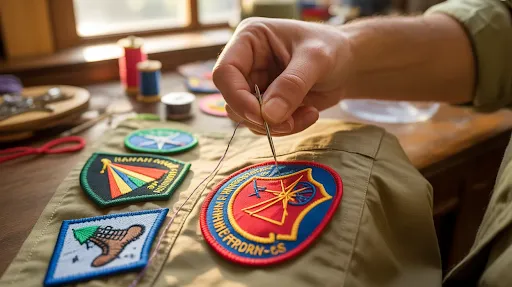
Thread a needle with a strong thread and knot the end. Start from the inside of the uniform so the knot stays hidden. Bring the needle up near the patch edge and begin stitching around the border.
A whip stitch is the easiest option and holds well. Keep stitches even and close enough that the edge stays flat. On corners or curves, shorten your stitches so the border looks neat instead of wavy.
When you get back to the start, tie off on the inside. Run your needle under a couple stitches first, then knot it tight and trim the thread close.
If you want a little extra polish, the jacket patch guide “How to Sew a Patch on a Jacket and Make It Look Awesome” has good tips on keeping edges clean and corners sharp.
Sewing Machine Method for Faster Results
If you have a sewing machine, this is the quickest route. Use a heavy duty needle and strong thread. Stitch close to the patch border.
Go slow on corners. Stop with the needle down, lift the presser foot, rotate the fabric, and continue. Backstitch at the beginning and end to lock the thread.
Machine stitching is especially useful if the uniform sees a lot of washing or if you’re adding several patches at once.
Not Ready To Sew Yet
If you need a temporary solution for an event and you plan to sew later, there are ways to attach scout patches without sewing. Just treat it as a short-term fix, not the final job.
FAQs
Do you have to sew scout patches on?
Most troops prefer sewing because it lasts longer and looks cleaner. Temporary methods can work, but stitching is usually the most reliable.
What stitch works best for scout patches?
A whip stitch is simple and strong. A tight machine stitch close to the border also works great for a clean look.
How do you keep a scout patch straight?
Mark placement while the uniform is being worn, then pin or clip it flat before you stitch. Check alignment one more time before you commit.
Can you sew a patch on a sleeve without sewing it closed?
Yes. Slide cardboard inside the sleeve so you only stitch through the outer layer.
Make It Look Official
Now you know how to sew on scout patches so they stay put and look clean. If you want uniform-ready patches with crisp borders that are easy to stitch, The Eagle Patches USA can help you get patches that look sharp and hold up through real wear, real washing, and real scout life.